
FOUNDER
Noam Polinger
Read →
FOUNDER
· April 29, 2026 · 6 min read
“'I'm a steward, building with what I've been trusted with.'”
There is a particular kind of person you only recognize once you've spent time around them. Quiet at first. Reserved. Easy to potentially overlook in a room full of louder voices selling louder things. And then, slowly, you notice the work. You notice that every frame they shoot is composed like a sentence in a sermon. You notice that they don't have the most 'followers', don't 'brand' much, don't perform much — and yet the people they work with come back, and come back, and come back. You notice that they never once told you how good they are, because they didn't need to.
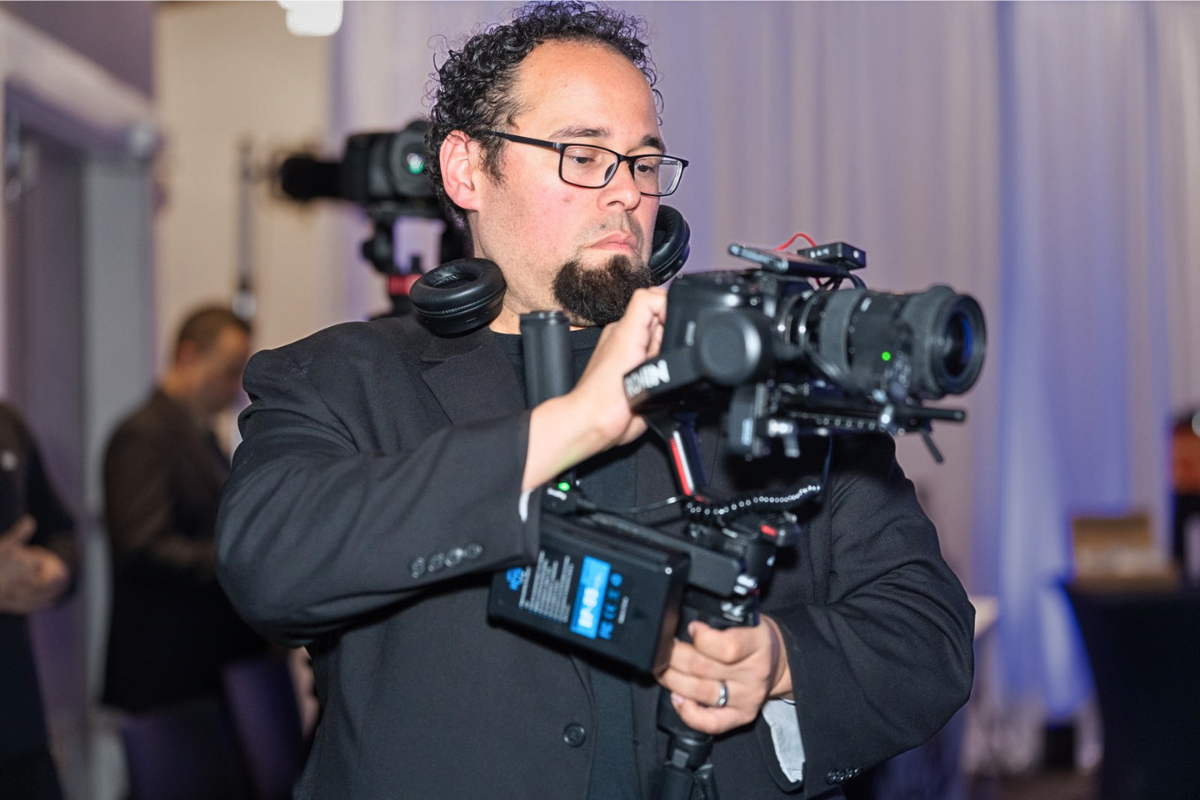
Jose Virella is that person. He is the founder of Samson Videography — though calling Samson a videography company is a bit like calling a cathedral 'just a building'. Technically, it's true. Functionally it doesn't begin to describe the full story. Out of Tampa, Jose has been quietly building a body of work that has reached coaches, consultants, and ministry leaders across the country and the world, including some of the biggest names in their categories. He wouldn't tell you that part. He'd tell you he serves people who have a message and need help bringing it to life. Which is true. It is also a profound understatement.
Ask him who he is, and he doesn't lead with the camera. 'I'm Jose,' he says. 'A man of God who seeks the Lord daily and carries a deep hunger to fund His Kingdom.' For Jose, the work and the faith are the same fabric, woven from the same thread. He frames his craft in the language of stewardship: he doesn't own his talent, he says. He's been trusted with it. Every project he takes on is, in his eyes, a small accounting of what he's done with what he's been given. That posture — almost monastic in its seriousness — is what makes the work hit the way it does. You can FEEL it before you can name it.
The texture of his current season, in his own words, is 'quiet but intense.' There is, he says, a sense of being shaped in the unseen more than the seen. Of being refined. He describes a strange and beautiful inner combination: hunger and peace at once. The hunger of someone who knows there is more ahead. The peace of someone who is no longer trying to prove anything. At eighteen, he believed his quietness meant he lacked something. He has spent the years since learning that the quietness was never actually a deficit, because instead it was the room he was being built in.
What he is building, on the surface, is a videography practice that serves leaders and creators who carry messages too important to leave underdeveloped. He talks about coaches and entrepreneurs and ministries who arrive at his door at the moment when there is a visible gap between their vision and their visibility — they know they are called to more, but they may lack the time, the structure, or the execution to translate that calling into something the world can actually see. Jose closes that gap. With speed, and efficiency. With a refusal to compromise on what he calls the level he knows he's called to operate at.
But what he is really building is something larger, and it is worth saying out loud because Jose may not always say it himself. He is building infrastructure for people whose work matters. He is building the visual and narrative scaffolding that allows leaders to be properly seen — not in the empty sense of attention, but in the substantive sense of message, weight, and reach. He is building, in his words,'systems and people I've trained helping fund Kingdom work globally, with resources flowing into churches, missions, and leaders who are actually changing lives.' Read that sentence again. That is the founding statement of an institution, not a freelancer's vision.
He is dangerous in his industry — though he wouldn't use that word — because he refuses the central lie of his field. The lie is that content is about volume. That the answer is always more, faster, louder, shinier. Jose has experienced otherwise. He does not need to chase the trends. He does not flood feeds with fluff. He thinks about the message and the identity behind the person before he ever picks up a camera, and the camera is only ever an instrument of that message. Most people in his industry are technicians, Jose is a translator. The work feels different on the screen because it was treated differently in the making.
Ask him what he refuses to compromise on, and the answer is immediate: integrity and excellence. He has walked away from money rather than produce work he doesn't stand behind. He has chosen to lose opportunities rather than violate HIS world-class standard. There is, in him, an old-fashioned conviction about craftsmanship — the kind of conviction that built guilds and apprenticeships and named saints after their tools. He talks about discipline that holds when no one is watching. He talks about excellence as obedience. These are not the words of someone optimizing a personal brand. They are the words of someone who believes the work is being witnessed by something larger than an algorithm.
Of all the things in the interview, one line stays with you longest. Jose says he is 'still in the process of becoming.' He says he doesn't see himself as someone who has it all figured out. He frames it as humility, and it is. But it is also, quietly, the most accurate thing anyone could say about a person at the beginning of something significant. The people who arrive at altitude already declaring themselves arrived rarely go further. The people who keep saying I am still becoming are usually the ones who are just getting started. And between you and I, Jose is MUCH further along than he will ever give himself credit for.
If Jose's work fully succeeds (and it will) — if the seed of what he is building reaches its full size — the picture is enormous. A studio that becomes an institution. A global practice that documents the work of leaders whose messages deserve to be properly carried into the world. A network of trained craftspeople who multiply the standard he holds. Resources flowing back into the causes and people he cares about. A quiet empire, which is the only kind worth building. He would not describe it in those words. But the architecture is already there in his answers, in his DNA, hiding in plain sight, waiting for someone to point at it and say: that is what you're actually doing.
When asked what came up reading the line life is a family, not a marketplace, Jose said it reminded him that everything he is building should be rooted in relationship, stewardship, and genuine care for people. That he never wants to lose sight of humanity in the process of building business. That he wants to serve people first, with integrity and respect, rather than viewing them through the lens of exchange. It is the cleanest articulation of HOME's mission we have heard from someone outside our walls. It is also, simply, how Jose actually works. Ask anyone who has ever sat across from him on a project. The relational posture isn't a marketing position. It's the man.
There is something to learn from people like Jose, especially in a season where the loudest voices win the most attention and the most attention is mistaken for the most value. The quiet ones — the disciplined ones, the ones who refine in private and refuse to compromise in public — are often the ones whose work outlasts the cycle. They are building institutions while the rest of the industry builds singular storefronts. And one day, the people who paid attention only to the storefronts will look up and notice the skyline has changed, and they will not quite be able to name when it happened.
Jose Virella is one of the people changing the skyline. He may not always see it yet. That's fine. The work sees it. The people he serves see it. And anyone who reads this, and then watches what he does over the next decade, will see it too.
More Features