
FOUNDER
Noam Polinger
Read →
FOUNDER
· April 29, 2026 · 5 min read
“'You can be anything—but only if you're willing to do what most won't. Hard work isn't optional. It's the price of becoming.'”
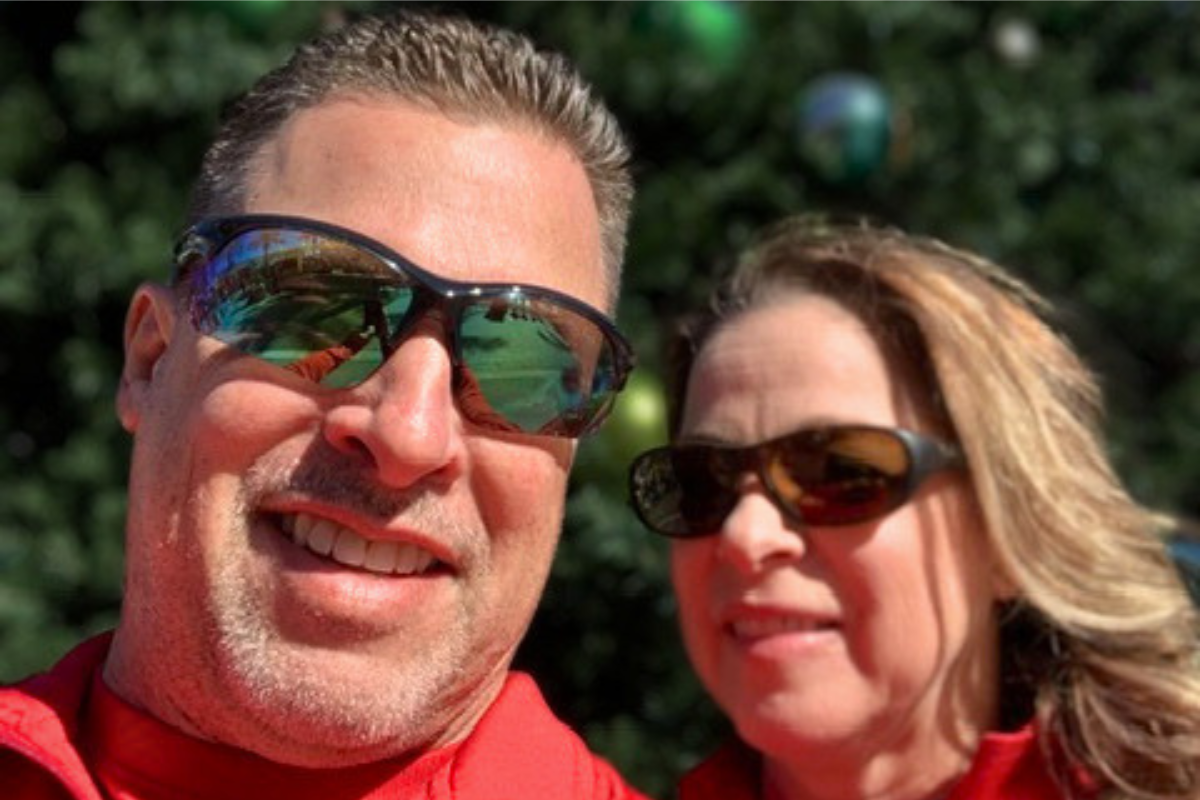
Ted Koontz prefers to be underestimated. He says it like it's a strategy, but listen long enough and you realize it's also a temperament — a way of moving through the world that has, until now, kept him quietly building one of the more impressive vertically integrated operations you've now heard of. Apparel, signs, awards, branded merchandise. Multiple companies under one umbrella, all of them growing, none of them needing to yell to the masses. Ted says he's 'just a guy.' He says it the way men who have built things from nothing tend to say it — with a smile and a confidence that knows better.
Ted is approaching sixty. He has grandchildren. He has worked his way up from a kid who paid his own way through college, did his time enlisted and as an officer, and never once let himself believe the floor was solid until the day he hit his first million, and even then… He keeps going. 'I knew in the back of my head I could always go back to the corporate world if I had to,' he says of those early years. 'Once I hit the million mark I knew I was going to be okay, and then there's never been a doubt since.' That sentence is the whole shape of him. Belief, then certainty, then the long quiet work of compounding.
What changed isn't the work. What changed is that he's letting himself talk about it.
Ask him what he's actually building and he won't give you a drawn out mixture of titles and words. He'll tell you, plainly, that he's building a one-stop shop for customers who deserve better service than they're getting — high-quality products and services that make his clients' brands look great. The sentence is unadorned. There is no missionary language, or transformation rhetoric, no claims about saving the world. 'At the end of the day, we aren't curing cancer or sending a rocket ship into space,' he says. His customers want quality, on time, with someone they can call when something goes sideways. Consistency + excellence. That's it. And somehow, in an industry he describes as full of mom-and-pops being slowly crushed by consolidating vendors and Wall Street's recent discovery of his sector, that humility is exactly what makes him dangerous.
His philosophy is zigging when everyone else is zagging, a foundation that forges the top 1% of entrepreneurs who understand that intuition, imagination, and creativity are what create real PROGRESS. He shares this philosophy with his team the way a professional sports coach says it — part philosophy, half instruction. Ted is constitutionally allergic to satisfaction. New things: always. Reinvention: always. The market shifts and he shifts with it, sometimes ahead of it. 'Too many people get comfortable and they slowly fall away in my opinion.' He has watched it happen. He is determined not to be one of them, and he won't be.
There is a pillar he learned early and has never let go of: don't lie, don't cheat, don't steal, and don't tolerate others who do. It is the kind of operating principle that sounds like a Hallmark line until you watch a man actually live by it for decades. When you ask what he refuses to compromise on, this is the answer. Everything else is negotiable. This is not.
The person he says is most irreplaceable is not technically on the team at all, and yet she's THE most important member. It's his wife. She is, in his words, the key behind the success in reality. Everyone needs someone who can call them out for their foolishness, he says — love them in spite of their failures, kick them in the butt when they need it. The way he talks about her is the way men of his generation talk about the people who actually held the whole thing together while the world gave them the credit. A trait that we see dwindling in today's younger generations. There's a particular kind of honesty in it. He knows. And he wants you to know that he knows.
Ted is not overly religious, but his faith is strong, as evidenced by his values and his operations, and in the last year or so he has become more open about it. This is part of the lifting of the head. He doesn't need to preach to people. He just also no longer needs to pretend that he doesn't believe.
When you ask what success looks like in ten years, he doesn't talk about valuation. He has a number — but he immediately undercuts it with a question. At what cost? He wants his customers cared for before anything else. He wants his staff to feel that the company cares about them. He wants his family together. He wants to continue developing the younger generation so he can step into the role he's earned: mentor. 'I think that would be called success.' It is one of the most quietly radical definitions of the word you'll hear from a founder with his level of experience.
There is something he had to unlearn to get here. The intensity that built the first million doesn't necessarily serve the next decade. He has been working, he says, on keeping his cool, staying composed, and not taking things so seriously. It is the kind of admission most men in his position would never make on the record, and yet something we can all better institute better within ourselves. He has no fear in talking about his experiences casually, almost as an aside, the way someone tells you about the weather.
When the phrase life is a family, not a marketplace is put in front of him, he doesn't flinch. Family, for him, is everything — and not in the airbrushed sense. 'Family isn't always perfect or clean or even always loving,' he says. 'But family means we will pull together and forget our issues when we have to.' He has three of them, by his own count. The one he was born into. The staff he's built. The customers he's chosen to keep close. He cares about their success, he says, as much as he cares about his own. In his category of business — one that has been ground down by transactional pricing and commoditized fulfillment, THIS is the moat. He is in the relationship business. He tells his team this constantly. BUILD RELATIONSHIPS. Be problem solvers. He lights up when a client calls and asks if he can help them with something outside the original scope. That's the work. That's the whole point.
So why come into the light now, after four decades of preferring the shadows? His answer is honest in a way that is rare in features like this one. 'In all honesty, this is all new to me.' He has kept his head down. He hasn't asked for or sought attention, contrary to today's 'attention-based' transactional society. He has never really worried about being seen. But he feels, finally, that the work and the impact are good enough to be talked about — and that maybe the community deserves to know that there are still operators out there who give a damn. 'If you aren't using us,' he says, 'then you probably aren't being treated as well as you could be.' It's the closest thing to a sales line he'll deliver in the entire conversation, and he says it almost reluctantly, as if the marketing department made him. Because in all honesty he doesn't need to say it, you'll see the difference from the moment you shake Ted's hand.
What Ted Koontz reminds us — and what HOME exists in part to honor — is that there is a generation of operators who built quietly, served loyally, impacted us greatly, and never asked for the spotlight, and that the world is poorer for not having heard from them. He is one of the last of a particular kind: a man who came up the long way, kept his word, took care of the people in his orbit, and is now, in the season of grandchildren and reflection, ready to share what he's learned. Not because he needs anything. Because there is a lifetime of wisdom worth passing on.
He will tell you he prefers to be underestimated. We are choosing not to oblige him. We estimate Ted to be one of the pillars of American business, and his success serves as an example to the world of what is possible.
More Features